BY HAND
Eighteen steps
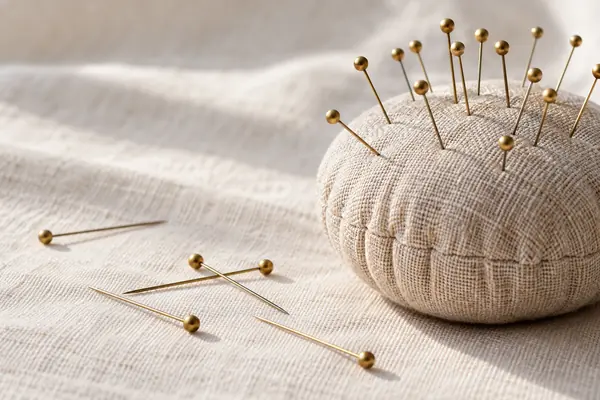
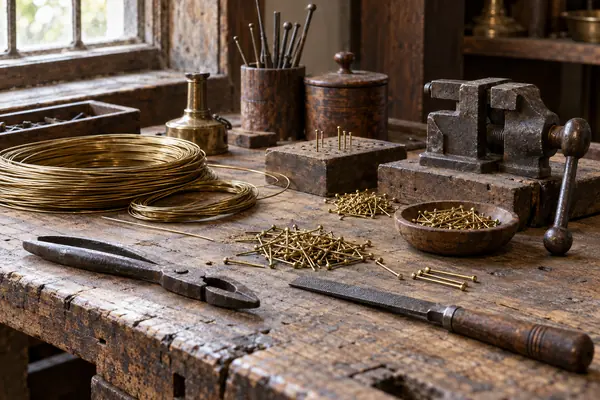
In 1776 Adam Smith described pin making as about eighteen distinct operations: one man draws the wire, another straightens it, a third cuts it, a fourth points it.
See the numbers doodlepins
00THE STORY OF A SMALL THING
Few objects are as ordinary as a pin.
Yet making one by hand took about 18 separate steps, and Adam Smith made the pin workshop his example of the division of labour. Then machines, and a single bent wire with a spring, changed it for good.
Read an old pin01Principles
02THE SHORT ANSWER
By many hands, by machine, and in one bent wire.
Each step made pins cheaper and safer.
BY HAND
In 1776 Adam Smith described pin making as about eighteen distinct operations: one man draws the wire, another straightens it, a third cuts it, a fourth points it.
See the numbersBY MACHINE
Hand factories made around 5,000 pins a day. A factory started in 1836 made upwards of 70,000 by stamping each head from the same piece of wire.
Read an old pinTHE SAFETY PIN
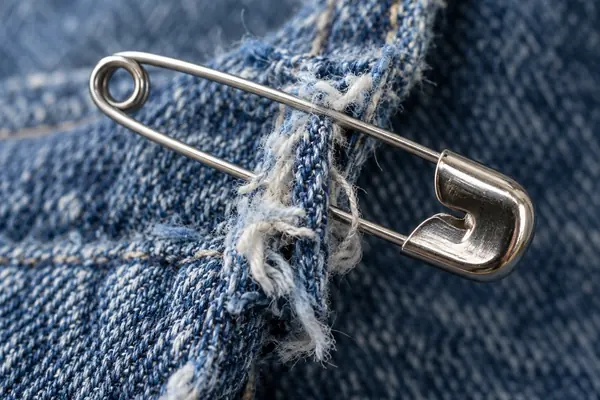
Walter Hunt's 1849 patent made a pin from one piece of wire combining a spring and a clasp. He is said to have designed it in three hours to settle a $15 debt.
More history03READ AN OLD PIN
Archaeologists use small details to tell old pins apart. Pick a feature to see what it suggests. The bar shows how early the pin could be.
Based on an archaeology note from Fairfax County Park Authority and Walter Hunt's 1849 patent. A clue, not a firm date.
04TWO NUMBERS WORTH KNOWING
Adam Smith's famous example,
and what machines did next.
4,800 a day
Pins per worker in a ten-man workshop
Smith saw ten men make about twelve pounds of pins a day, upwards of 48,000 pins. Working alone and untrained, he wrote, each could scarcely make twenty, perhaps not one.
THE WEALTH OF NATIONS · 1776
70,000+
Pins a day in an early machine factory
Hand factories produced around 5,000 straight pins a day. A factory formed in 1836 made upwards of 70,000 a day from single pieces of wire with stamped heads.
MACHINE PINS · 1836
Smith's point was the division of labour: splitting a job into separate trades made each worker hundreds of times more productive.
05FOUR CLUES FOR FINDERS
Old pins turn up under floorboards and on archaeological sites. These clues come from how archaeologists read them.
A coiled wire head suggests a handmade pin. A stamped flat or ball head made in one piece suggests a machine.
A green patina points to copper in the wire, common in brass and copper pins.
A coiled spring and clasp make it a safety pin, a design patented in 1849.
Archaeologists say pins usually point to a domestic area, where they were used, stored or thrown away.
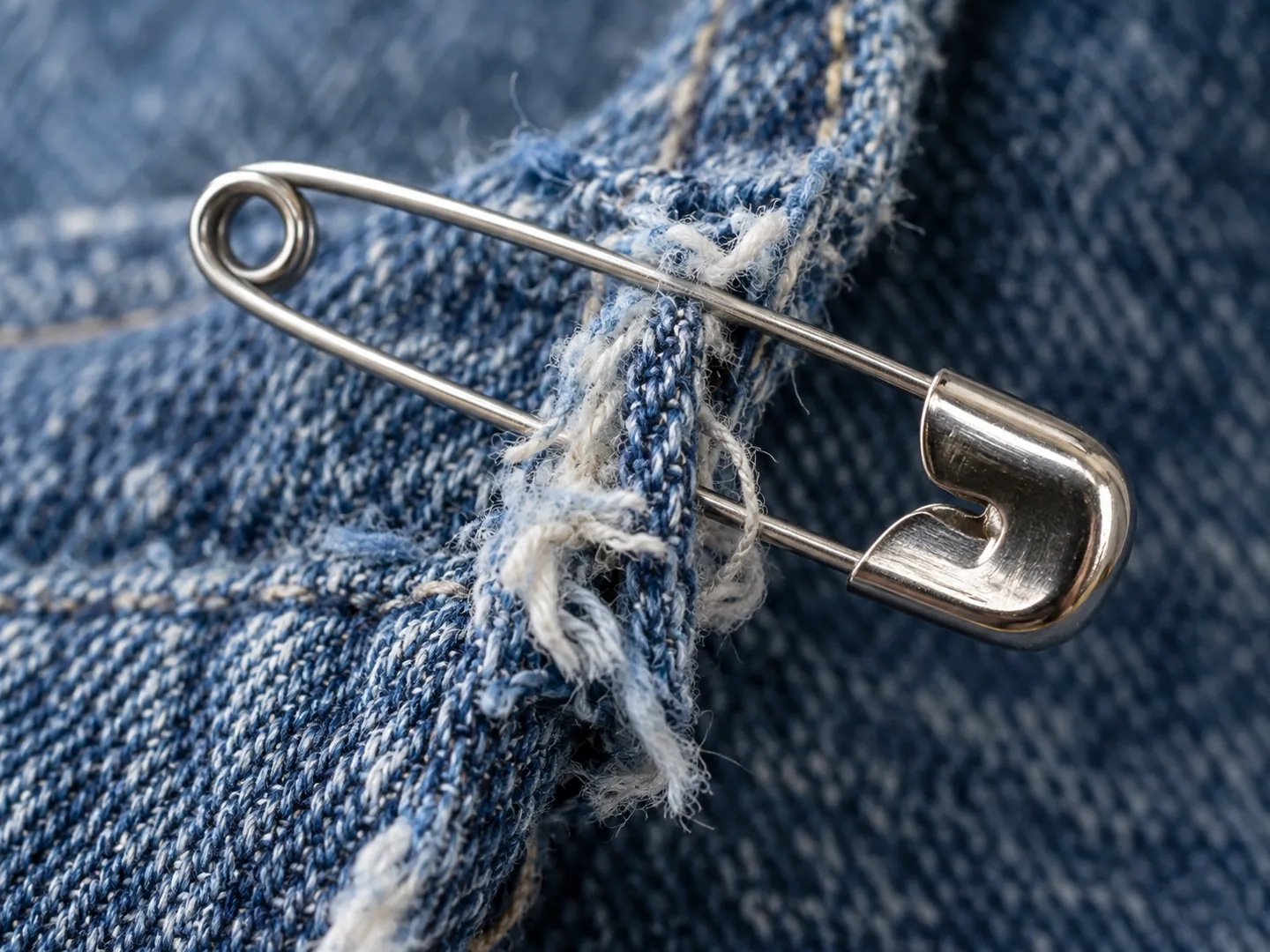
06GLOUCESTER, A PIN CITY
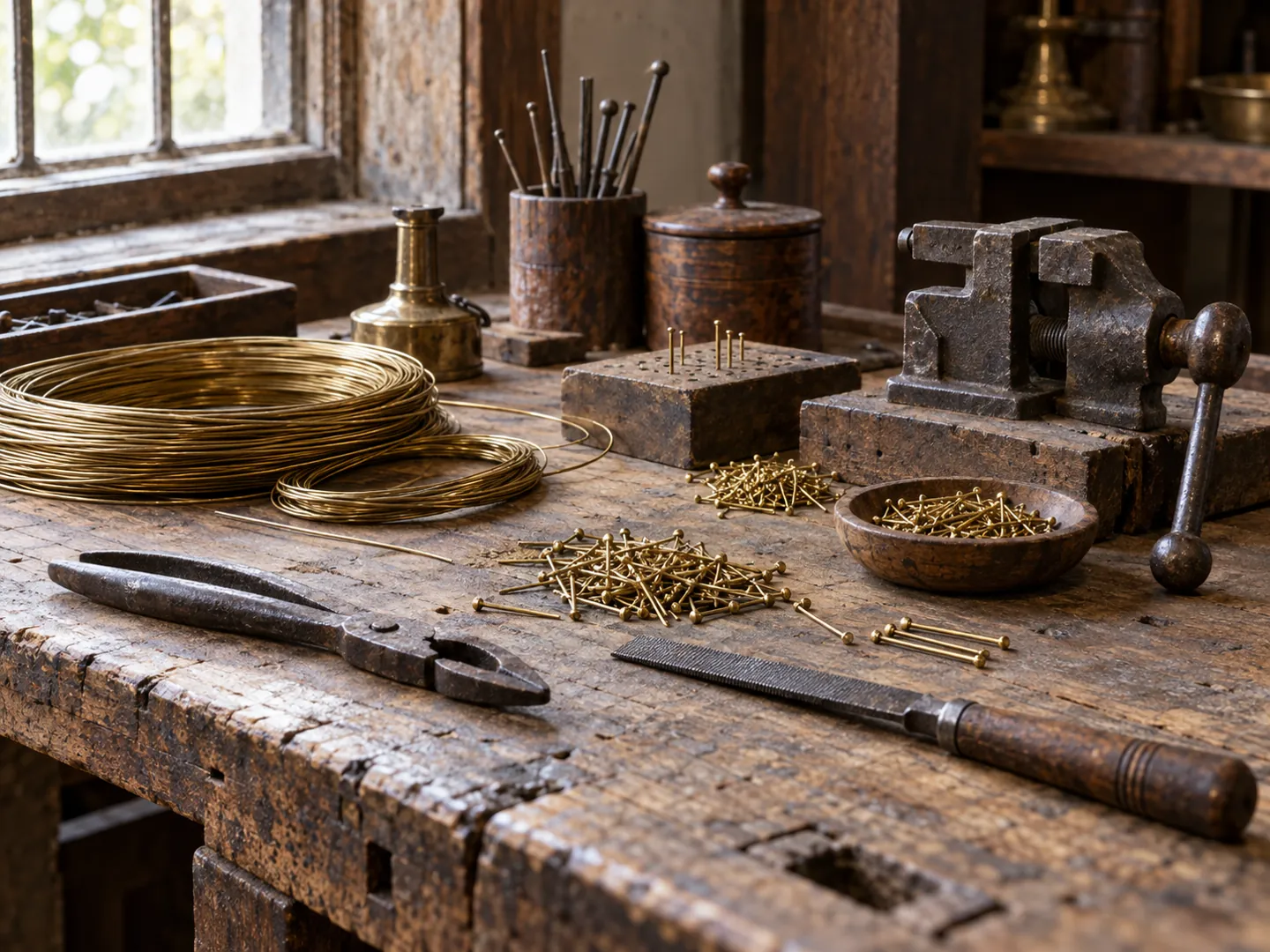
Pin making was significant in Gloucester from the 17th century. From 1743 to 1853 pin manufacturers worked at 99 to 101 Westgate Street, now the Museum of Gloucester's Folk building, which still holds pin-making machines.
Museum staff have found thousands of pins in every stage of making, from bare shanks to spiral heads. Bollards on Eastgate Street are shaped like pins in homage to the trade.
07Questions
Adam Smith used it in The Wealth of Nations (1776) to show the division of labour: ten workers splitting about eighteen operations made upwards of 48,000 pins a day.
Wire was drawn, straightened, cut, pointed and ground, then a separate coil of wire was wound on as the head. Pin makers used a grooved bone to keep the pin straight while sharpening.
Walter Hunt of New York patented a pin made from one piece of wire with a coiled spring and a catch on 10 April 1849. Similar pins had existed for ages, but not from a single wire.
Many old pins were made from brass or copper wire, and pins with copper content often have a greenish patina when they are dug up.
Before the 17th century metal pins were expensive. Machine factories from 1836, stamping heads from the same wire, made pins even more common and affordable.
08Sources
ABOUT THIS NAME
doodlepins.com is part of the DoodleSale portfolio. It isn't in an auction right now, but you can ask about leasing it.